Why "Pushing Through" is Killing Your Grades (and Your Brain)
We've all been there: It's 11 PM, you've been staring at the same paragraph for twenty minutes, and your brain feels like a browser with 47 tabs open—half of them are frozen, and you can't find where the music is coming from.
I used to pride myself on "marathon study sessions." I'd sit for four hours straight, fueled by cold coffee and sheer anxiety. By the end, my lower back felt like it was made of dry twigs, and I couldn't remember a single thing I'd read in hour two.
Here's the hard truth I learned after burning out: Your brain wasn't designed for static, high-stakes focus. When you sit still for hours, your blood flow stagnates, your oxygen intake drops, and your prefrontal cortex—the part of the brain responsible for complex learning—effectively goes into "low power mode."
The "Active Break" Secret to Neuroplasticity
Most students think a break means switching from a laptop screen to a phone screen. But scrolling through TikTok doesn't rest your brain; it just floods it with more dopamine-heavy information to process.
True cognitive recovery happens when you move. Research published in the British Journal of Sports Medicine suggests that short bouts of physical activity can significantly improve executive function and attention span.
When you get up and move for just 5 minutes:
- BDNF (Brain-Derived Neurotrophic Factor) Spikes: Think of this as "Miracle-Gro" for your brain cells. It helps you knit new information into long-term memory.
- Cortisol Regulation: Movement helps flush out the stress hormones that accumulate when you're cramming for a deadline.
- Postural Reset: You reverse the "student slouch" that constricts your breathing and leads to tension headaches.
Stop Grinding, Start Flowing
Join thousands of students using science-backed movement breaks to ace their exams without the burnout.
How PomoFit Transforms Your Study Sessions
PomoFit isn't just another timer; it's a cognitive performance coach. We use a modified Pomodoro technique specifically calibrated for high-intensity learning.
1. The 25-Minute Deep Work Sprint
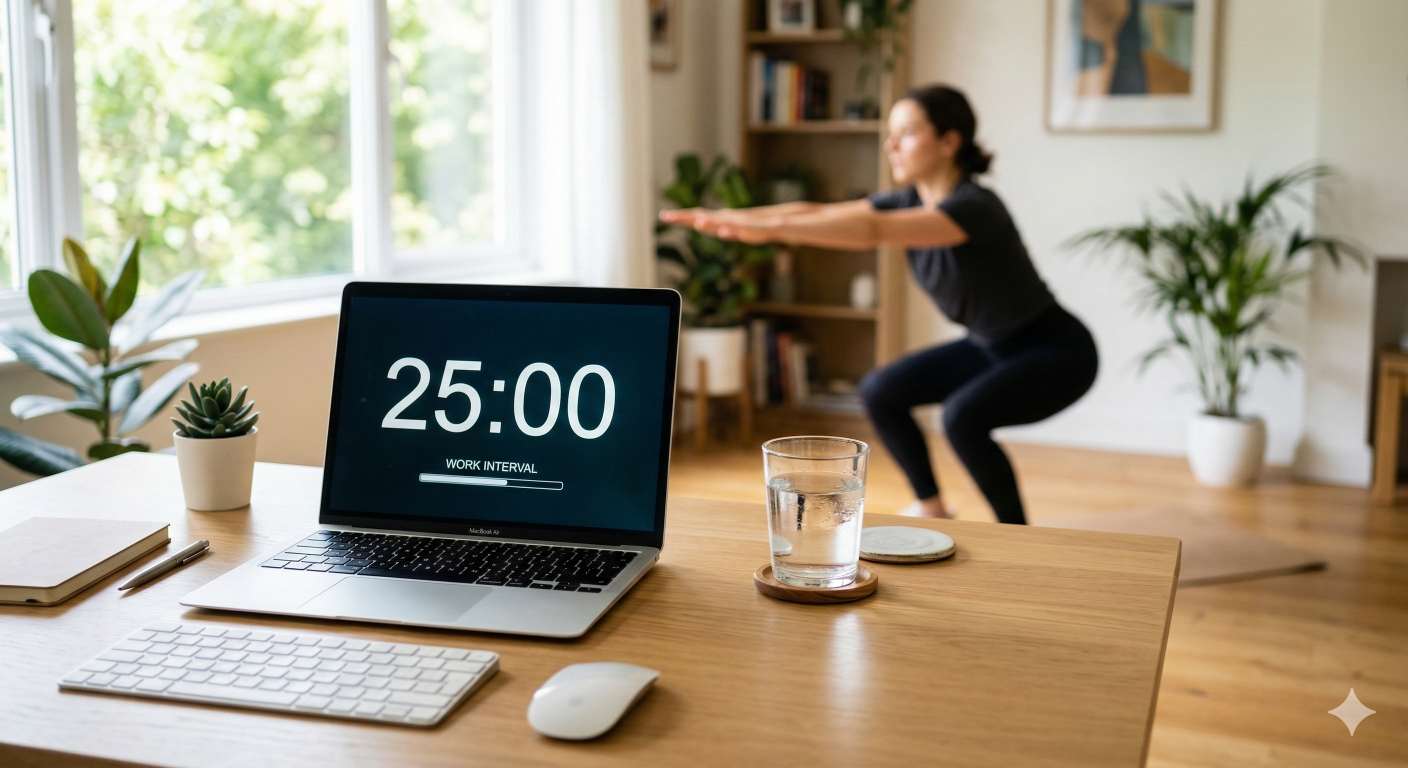
During this phase, the UI stays clean and distraction-free. You focus entirely on the material. Because you know a break is coming, your "monkey brain" is less likely to wander toward social media.
2. The Integrated "Movement Menu"
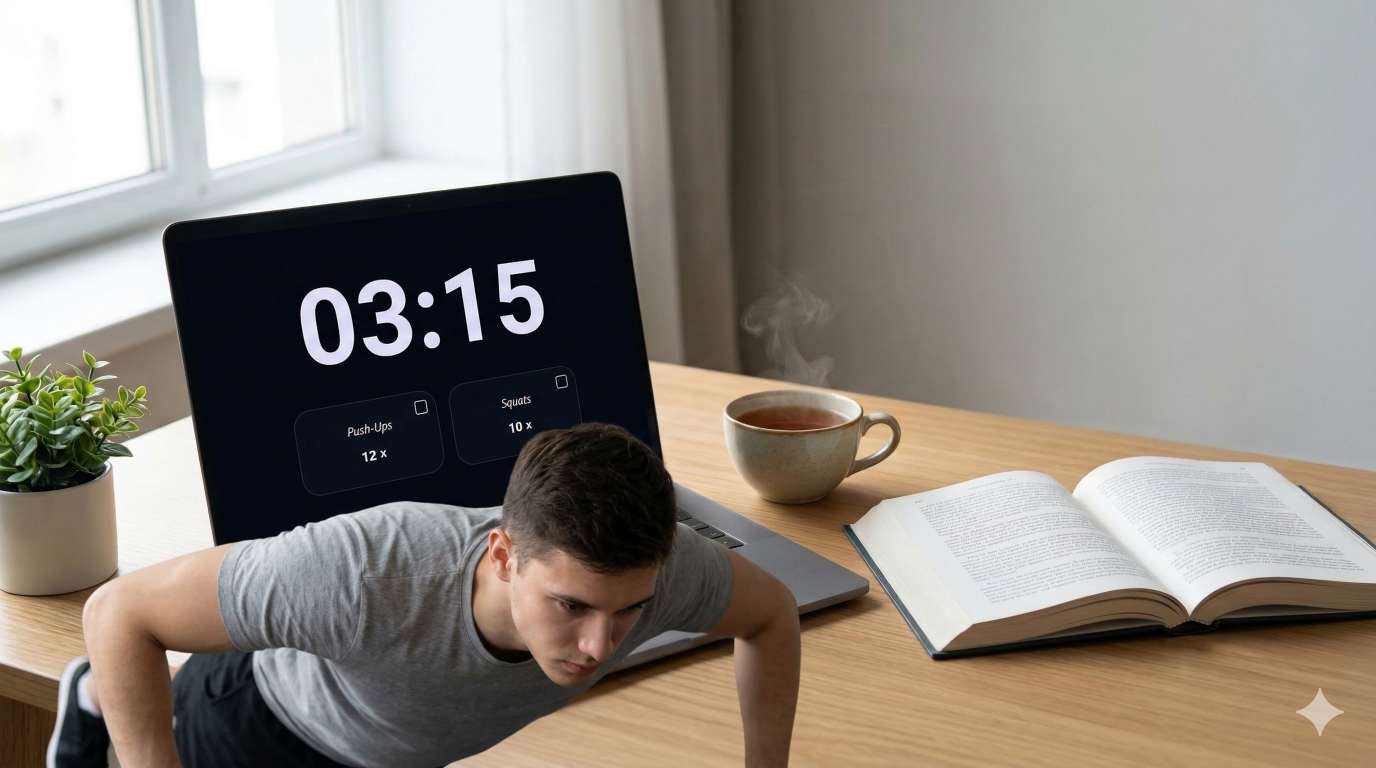
When the timer hits zero, we don't just tell you to "take a break." PomoFit suggests specific, low-friction exercises—like desk push-ups, cat-cow stretches, or air squats—designed to get your blood pumping without requiring a gym change.
3. The Sensory Reset
By shifting your focus from a 2D screen to your 3D body, you give your optic nerve a rest and allow your "Default Mode Network" to kick in. This is where the "Aha!" moments happen—when your brain subconsciously connects the dots of what you just studied.
Strategies for Maximum Retention
To get the most out of PomoFit, I recommend these three "Pro-Student" habits:
- Hydrate on the Bell: Drink a full glass of water every time your 5-minute break starts. Dehydration is a leading cause of pseudo-fatigue.
- The 20-20-20 Rule: During your PomoFit break, look at something 20 feet away for 20 seconds to reduce digital eye strain.
- Active Recall Breaks: Use the first 60 seconds of your movement break to summarize what you just learned out loud. According to studies on the testing effect, retrieving information while physically active can strengthen neural pathways.
Don't Just Study Harder. Study Smarter.
You can keep trying to out-willpower your biology, or you can start working with it. Whether you're prepping for the Bar exam, a medical board, or just a mid-term, PomoFit ensures that when you sit down to work, your brain is actually "online."
Your back will thank you. Your GPA will, too.
Start studying smarter today.
No account needed. Just hit start and let PomoFit guide your breaks.